Why NAD⁺ Became the Language of Beauty
A century-old cellular energy molecule is now everywhere in beauty. Here's where NAD⁺ meets skin vitality, and why the shift matters.
NAD⁺ is everywhere lately. In the supplement aisle, in longevity research, and now in skincare. This molecule was discovered more than a hundred years ago — so why, of all moments, did it become the language of beauty now.
The energy cofactor every cell uses
NAD⁺ (nicotinamide adenine dinucleotide) is less a cosmetic ingredient you apply to one spot than a coenzyme nearly every cell in the body relies on to do its work. It has been studied for its broad involvement in the metabolism that makes and spends energy — mitochondrial energy production, the management of oxidative stress, the repair of damaged DNA.
Put simply, it's closer to a helper that keeps a skin cell's fuel running. Before any visible result, it's involved in the basic fitness of the cells that create that result.
The curve that falls with age
The decisive reason NAD⁺ draws attention is a single curve. Levels are understood to decline as we age, with the drop becoming pronounced after the thirties. The amount cells spend rises, while the pace at which it's replenished slows.
As cellular energy falls, recovery slows and the loss of firmness and texture speeds up. The speed of skin — one of the variables that governs it from the inside is precisely this NAD⁺ curve.
From anti-aging to energy
NAD⁺ became the language of beauty alongside the growth of longevity science. As research into cellular aging — sirtuins, mitochondria — began to place energy metabolism at its center, skin too came to be seen not as a surface with wrinkles to erase but as an organ whose energy is worth protecting.
As researchers, including teams at Harvard, turned their attention to this molecule, the story told about the ingredient changed too. Not what covers or conceals, but what helps cells work at their own proper pace. NAD⁺ became the name that symbolizes that shift in perspective.
But it only matters if it arrives
There's a limit worth stating honestly. The NAD⁺ molecule is relatively large and doesn't easily pass through the skin barrier on its own. Many formulas turn to precursor forms, or the ingredient ends up sitting on the surface. In the end, the value of NAD⁺ is decided as much by how well it's made to reach as by what's put in.
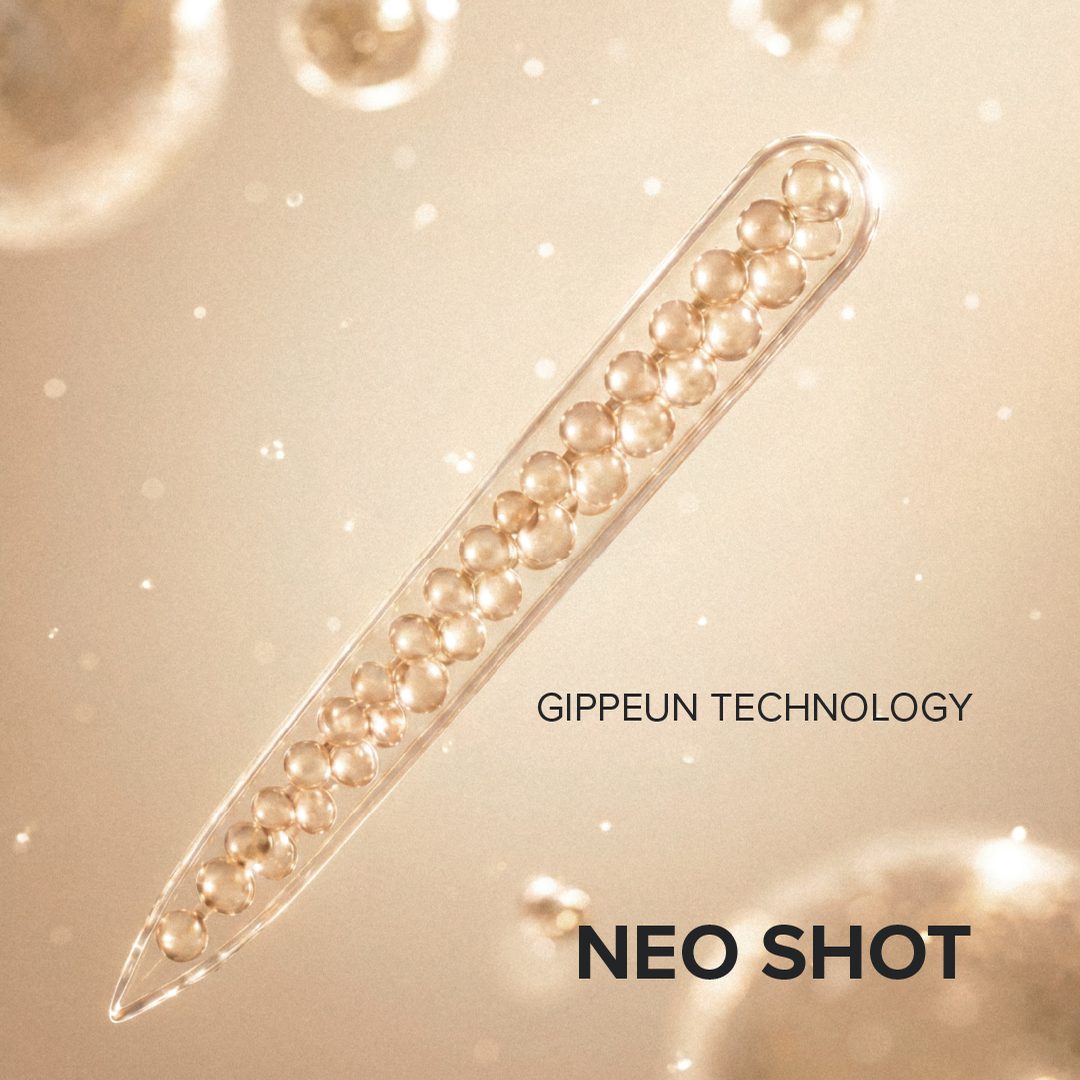
This is why GIPPEUN designed NAD⁺ alongside the ultra-fine delivery of the NEO SHOT. By refining the micro-needle spicule down to around 60μm, we reduced irritation and raised delivery — and because it reaches without pain, you can use it daily and let it accumulate. An energy ingredient becomes skin's language only when it reaches deep and compounds every day.
Not adding — awakening
How we talk about NAD⁺ deserves the same care. It's less about injecting something to turn back time than about slowly protecting the vitality skin already has, the vitality that fades with age.
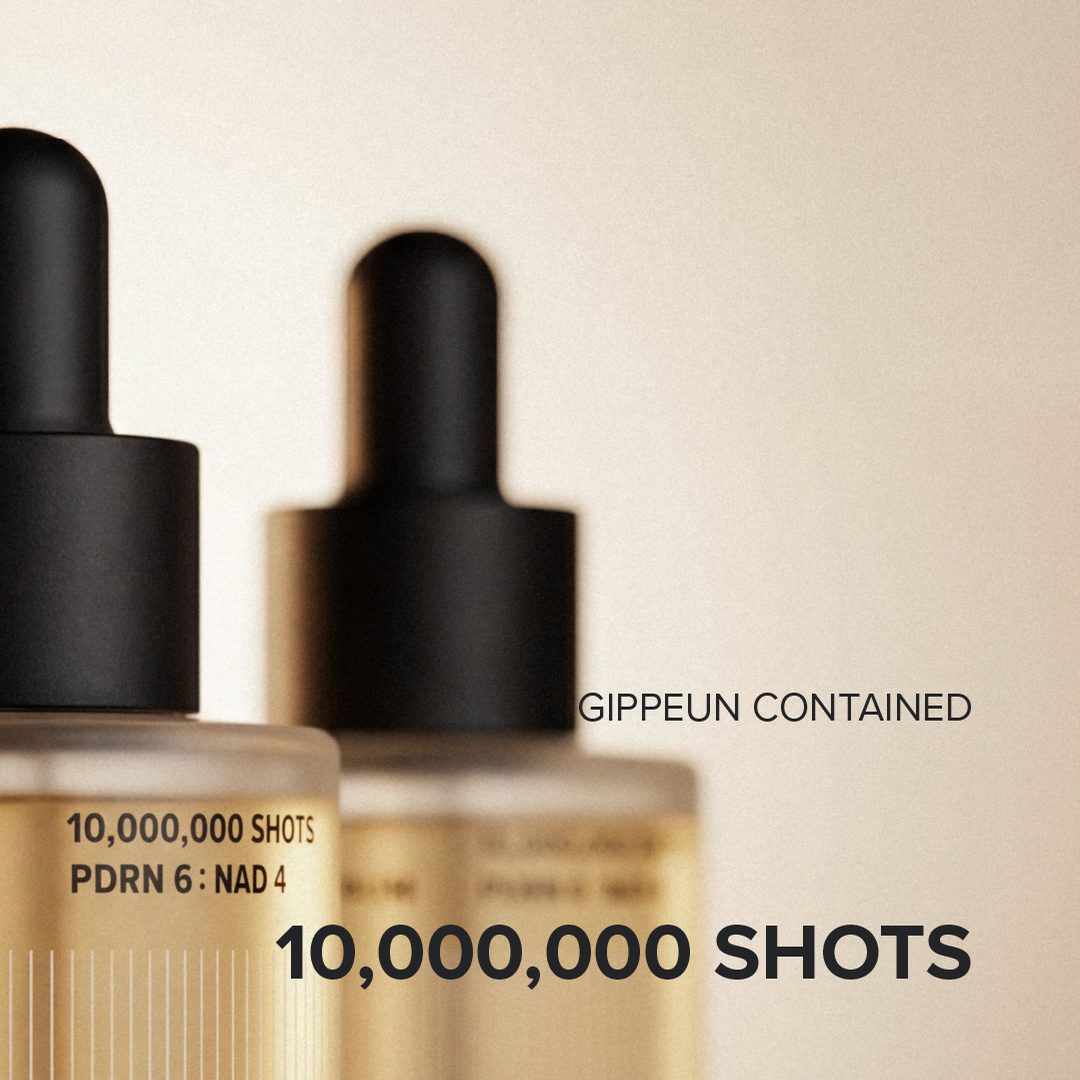
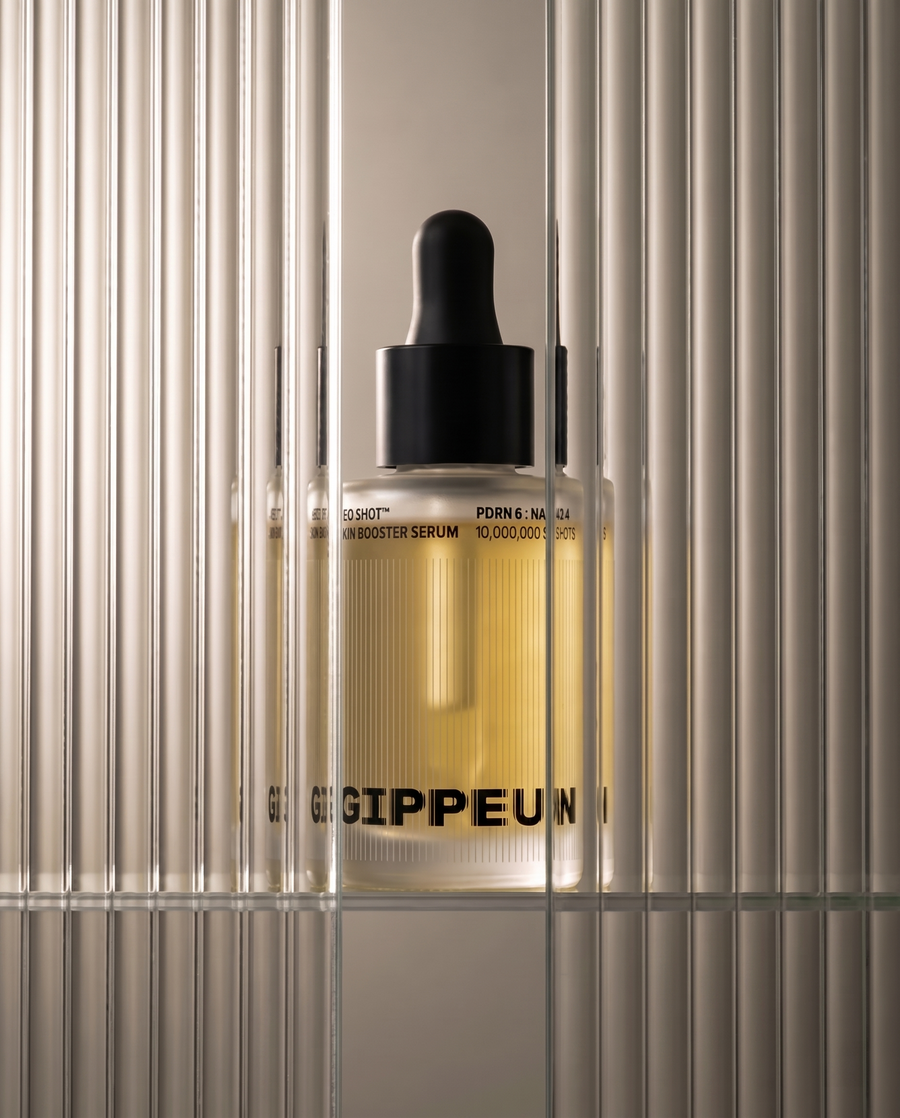
The same reasoning is why GIPPEUN places recovery-focused PDRN and energy-focused NAD⁺ together at 6:4 in the serum. When the power to fill damaged ground and the power to get cells moving again move together, skin begins to settle into a single flow rather than a reaction to each passing day.
That NAD⁺ became the language of beauty is a signal that we've started to see aging not as a result but as the speed of energy. At the center of that perspective sits GIPPEUN's longevity formula.
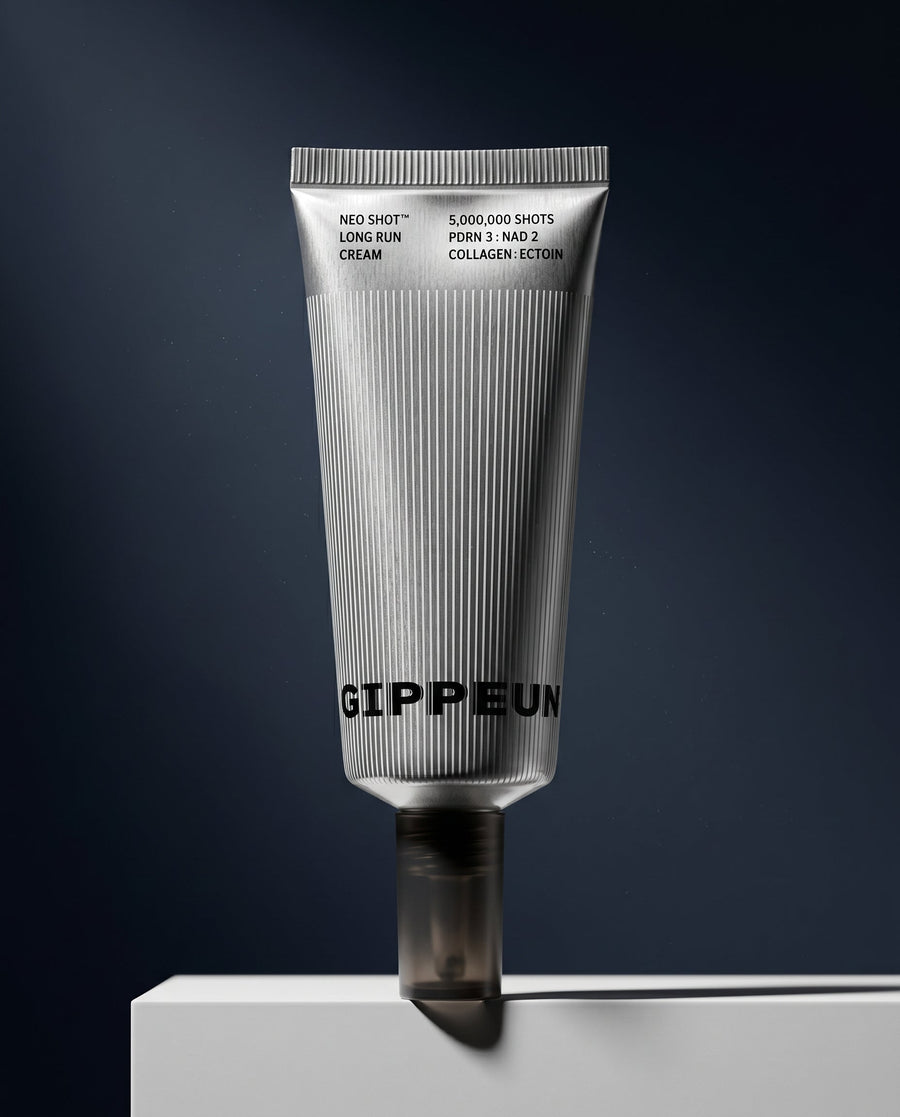
The GIPPEUN NEO SHOT lineup carries NAD⁺ and K-ginseng PDRN into a daily serum and cream, quietly protecting skin's energy curve.
FEATURED IN THIS STORY
Next story
View all stories →EP.03 · EP.03 · Science
PDRN and the Science of Recovery
PDRN doesn't add something new to skin. It helps skin do what it ...
EP.04 · EP.04 · Routine
The Power of Care That Compounds Daily
One intense treatment or one quiet day, repeated? Skin remembers ...
EP.05 · EP.05 · Science
Developer Notes: If It Hurts, You Won't Do It Daily
NEO SHOT began not with an ingredient but a sentence. The people ...